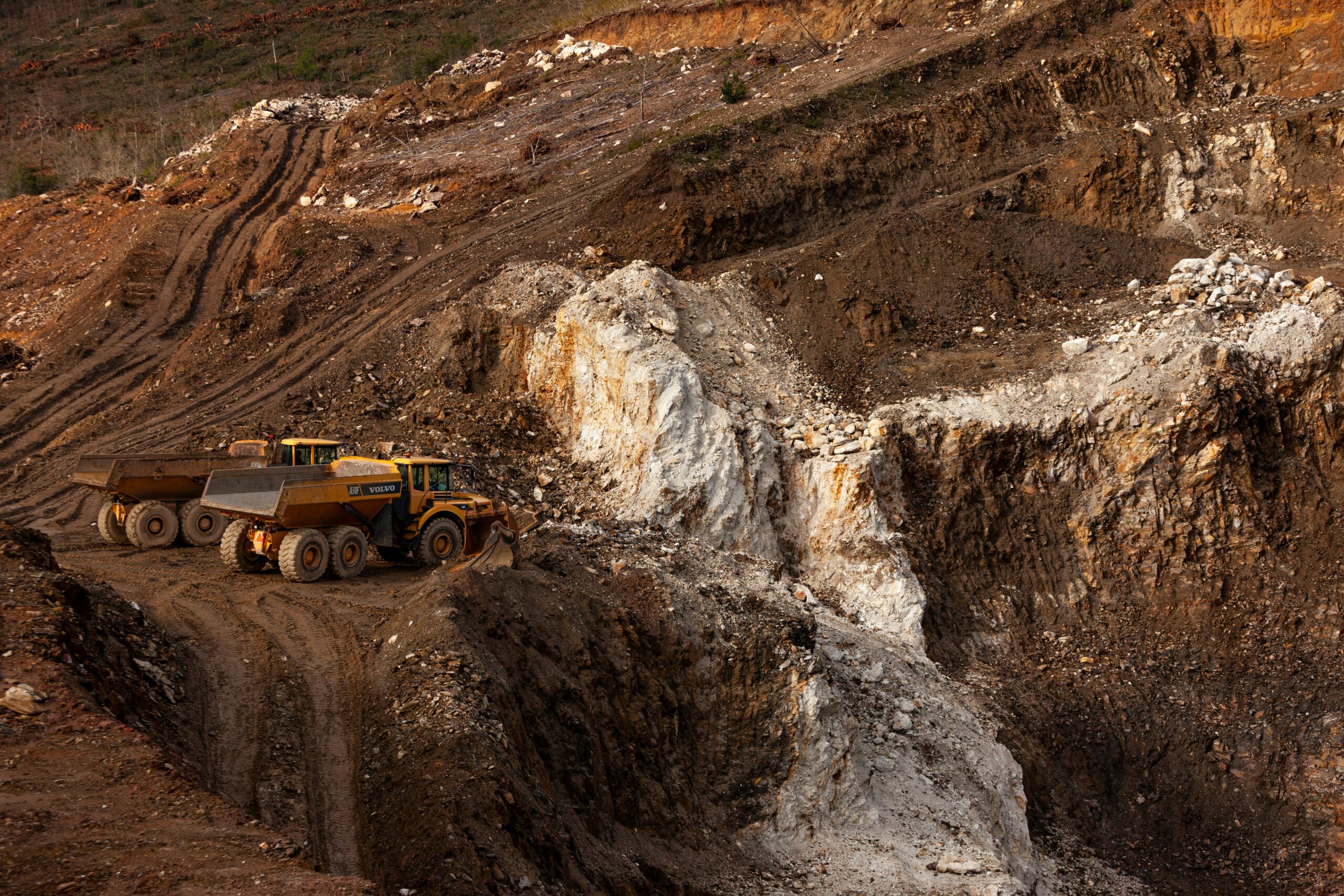
Traditional investors often view mining as a straightforward commodities game driven by gold, silver, copper, or iron ore prices. However, this perspective misses the deeper structural shifts happening within the global mining ecosystem. While headline prices attract attention, the real profit drivers are increasingly found in exploration innovation, processing efficiency, and strategic supply chain positioning.
As a result, many investors end up reacting to short-term price cycles rather than understanding the long-term value creation occurring behind the scenes. This narrow focus creates a blind spot where substantial opportunities develop quietly, often before mainstream capital recognizes them.
Focus on Commodities Instead of Value Chains
One major reason traditional investors miss real mining profits is their fixation on raw commodity prices rather than the entire value chain. They tend to track spot prices and ignore upstream and downstream dynamics such as extraction technology, logistics optimization, and refining breakthroughs. Consequently, they overlook companies that improve margins without necessarily increasing production volume.
Moreover, value is increasingly created in the middle layers of the mining ecosystem. For instance, firms that develop advanced ore processing techniques or sustainable extraction methods can significantly outperform traditional miners. Yet, because these companies do not always fit the classic “commodity play” narrative, they are frequently underweighted in conventional portfolios.
Transitioning to a broader perspective reveals that mining is no longer just about what comes out of the ground. Instead, it is about how efficiently and intelligently resources are transformed into usable materials. Investors who fail to recognize this shift often miss the most scalable profit opportunities.
Institutional Bias Toward Established Assets
Institutional investors also tend to favor large, established mining corporations because of perceived stability and liquidity. While this reduces short-term volatility, it often comes at the cost of long-term growth potential. Large-cap miners are typically more exposed to operational inefficiencies and slower adaptation to market changes.
Furthermore, this bias reinforces capital concentration in mature assets while starving emerging projects of funding. Smaller exploration firms and mid-tier producers, which often hold the highest return potential, struggle to gain visibility in institutional portfolios. Consequently, early-stage value creation is frequently captured by specialized investors rather than mainstream funds.
This conservative approach creates a structural inefficiency in the market. By prioritizing safety over innovation, traditional investors inadvertently miss the exponential upside that can emerge from smaller, agile mining operations.
Lack of Exposure to Emerging Mining Technologies
Another critical gap lies in limited exposure to emerging technologies transforming the mining sector. Automation, artificial intelligence, and remote sensing are redefining exploration accuracy and operational efficiency. These advancements reduce costs, improve safety, and increase yield predictability, yet many traditional investors underestimate their impact.
In addition, digital mining platforms and data-driven exploration models are creating entirely new categories of high-growth companies. These firms often operate at the intersection of software and physical extraction, making them difficult for conventional valuation models to assess. As a result, they are frequently excluded from traditional mining portfolios despite their strong upside potential.
Over time, this technological disconnect creates a performance gap. Investors who ignore innovation tend to concentrate in legacy mining operations with lower growth trajectories, while missing the faster-growing, tech-enabled segment of the industry.
Information Gaps and Slow Market Adaptation
Information asymmetry is another key factor contributing to missed opportunities in mining investments. Traditional investors often rely on delayed reports, quarterly disclosures, and legacy research models. This lag prevents them from reacting quickly to new geological discoveries or shifts in global resource demand.
At the same time, mining markets are increasingly influenced by real-time data, satellite imaging, and AI-driven geological analysis. Investors who do not integrate these tools into their decision-making process are at a disadvantage. They are often reacting to outdated information while more agile participants are already positioning themselves ahead of market shifts.
Additionally, the global demand landscape for critical minerals such as lithium, cobalt, copper, nickel, and rare earth elements is evolving rapidly. Those who fail to adapt their strategies risk missing entire growth cycles driven by electrification, renewable energy infrastructure, electric vehicles (EV supply chain), and advanced manufacturing expansion.
How Forward-Thinking Investors Capture the Upside
In contrast, forward-thinking investors approach mining as a multi-layered ecosystem rather than a simple commodity sector. They analyze mining technology innovation, ESG mining standards, geopolitical resource security, and critical minerals supply chains alongside traditional price metrics. This broader lens allows them to identify undervalued mining stocks, junior exploration companies, and high-growth mining technology firms earlier than the market.
They also diversify across exploration mining, production assets, royalty streaming models, and mining-tech infrastructure, balancing risk while maximizing exposure to long-term commodity supercycles. By doing so, they position themselves to benefit from both cyclical commodity booms and structural demand shifts in clean energy metals, battery materials, and global infrastructure development.
Ultimately, real wealth in mining investing is not captured by chasing headlines or reacting to short-term commodity volatility. Instead, it is built through strategic exposure to mining innovation, critical minerals investment trends, ESG-compliant mining operations, and next-generation resource extraction technologies. Investors who adopt this modern framework can unlock sustainable alpha, outperform traditional commodity-focused portfolios, and secure long-term capital growth in an increasingly resource-constrained global economy.