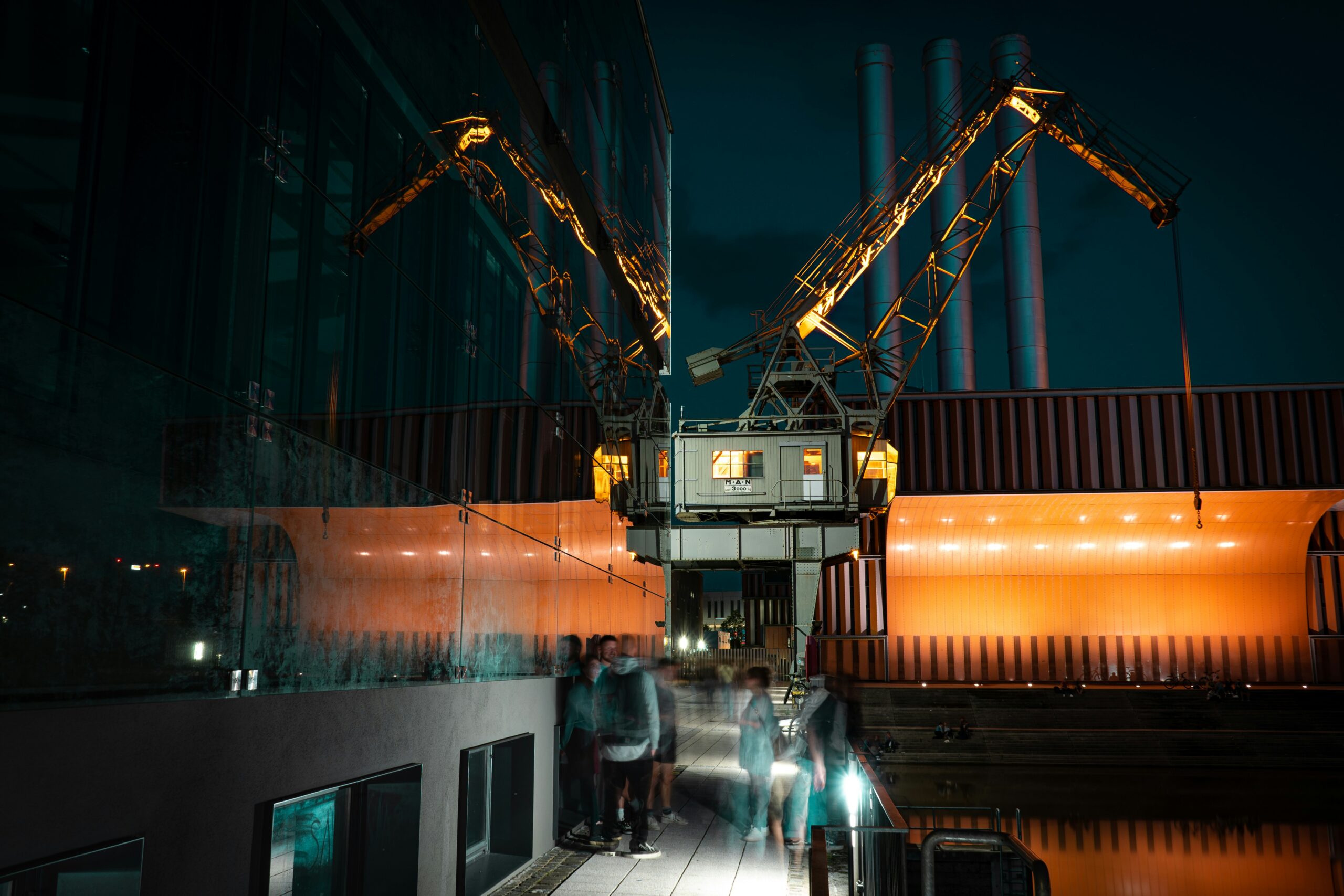
Heavy industry forms the foundation of modern economies. Mining, steel production, construction, manufacturing, energy, and other industrial sectors provide the materials and infrastructure that support daily life. However, these industries often operate with complex equipment, demanding environments, high energy requirements, and significant operating costs. As a result, technology adoption in heavy industry has become an important strategy for companies that want to improve productivity, safety, efficiency, and long-term competitiveness.
Digital tools are changing how industrial companies manage equipment, workers, energy, maintenance, and production. Automation, artificial intelligence, connected sensors, robotics, and advanced data systems give companies more information about their operations than ever before. Therefore, industrial leaders can make faster decisions while reducing unnecessary costs and operational risks. Successful technology adoption does not simply involve buying new equipment. Instead, it requires careful planning, workforce training, strong leadership, and clear business goals.
Digital Transformation Is Reshaping Heavy Industry
For decades, many heavy industrial businesses relied on proven machinery, manual inspections, and traditional production methods. These systems often remained in operation for years because replacing large industrial assets required significant capital. However, digital transformation now allows companies to modernize existing operations without completely rebuilding their facilities.
For example, companies can install sensors on older machinery to collect real-time information about temperature, vibration, pressure, and performance. Managers can then use this data to identify inefficiencies and potential equipment problems. Consequently, businesses can improve older assets while gradually introducing more advanced industrial technology.
Automation Improves Productivity and Consistency
Automation has become one of the most valuable technologies in heavy industry. Automated systems can handle repetitive, physically demanding, or highly precise tasks while allowing employees to focus on more complex responsibilities.
Manufacturers may use automated production lines to improve consistency, while mining operations can use autonomous or remotely controlled equipment in challenging environments. Likewise, warehouses and processing facilities can use automated systems to move materials efficiently. As automation grows, companies can improve production speed while reducing certain types of human error.
Predictive Maintenance Reduces Equipment Downtime
Unexpected equipment failure can create serious financial losses in heavy industry. A single machine breakdown may interrupt production, delay customer orders, and require expensive emergency repairs. Therefore, predictive maintenance has become a major focus of industrial technology adoption.
Connected sensors can monitor equipment continuously and send performance information to data platforms. Software can then identify unusual patterns that may indicate developing problems. As a result, maintenance teams can inspect or repair machinery before a major failure occurs. This approach can extend equipment life, improve reliability, and reduce unplanned downtime.
Artificial Intelligence Supports Better Decisions
Artificial intelligence allows industrial companies to analyze large amounts of operational data quickly. AI systems can identify patterns that may be difficult for employees to detect through traditional analysis.
For instance, companies can use AI to improve production scheduling, forecast equipment maintenance, monitor product quality, and optimize energy consumption. In addition, artificial intelligence can help managers compare different operating conditions before making decisions. However, companies still need skilled employees who understand both the technology and the industrial processes behind the data.
Connected Equipment Creates Smarter Operations
The Industrial Internet of Things connects machines, sensors, vehicles, and monitoring systems through digital networks. This connectivity gives companies a clearer picture of what happens across industrial facilities.
Managers can monitor equipment performance from centralized systems instead of depending entirely on manual inspections. Moreover, connected technology can provide alerts when operating conditions move outside normal limits. Real-time information allows employees to respond quickly and can help companies improve productivity across multiple sites.
Robotics Can Improve Workplace Safety
Heavy industry often involves hazardous environments, high temperatures, large machinery, heavy materials, and difficult working conditions. Robotics can help companies reduce employee exposure to some of these risks.
Robots may perform inspections in dangerous locations, handle heavy materials, or complete repetitive tasks that could cause physical strain. Remote-controlled machines can also operate in areas where direct human access creates safety concerns. Therefore, technology adoption can support both operational performance and workplace safety when companies use it responsibly.
Technology Helps Reduce Energy Consumption
Heavy industrial operations often consume significant amounts of electricity and fuel. Rising energy costs and environmental goals have increased pressure on companies to improve energy efficiency.
Digital energy management systems can measure consumption across machines, buildings, and production processes. Companies can then identify where energy waste occurs and make targeted improvements. For example, smart systems may adjust equipment schedules or production settings based on actual demand. Consequently, energy technology can reduce operating expenses while supporting broader sustainability goals.
Workforce Training Determines Technology Success
Even advanced technology cannot deliver strong results without employees who know how to use it. Therefore, workforce development should remain a central part of every industrial digital transformation strategy.
Companies can provide technical training that helps employees work with automated equipment, digital dashboards, data systems, and modern maintenance tools. Furthermore, experienced workers often possess valuable knowledge about industrial processes. Combining their practical expertise with new digital skills can create a stronger and more adaptable workforce.
Cybersecurity Becomes an Industrial Priority
As industrial equipment becomes more connected, cybersecurity becomes increasingly important. Digital networks can improve productivity, but they may also create new security risks if companies fail to protect them properly.
Industrial businesses need strong security practices for connected equipment, operational systems, and sensitive data. Regular software updates, employee awareness, access controls, and network monitoring can strengthen protection. In addition, companies should include cybersecurity planning when introducing new technology rather than treating security as an afterthought.
Building a Practical Technology Strategy
Technology adoption in heavy industry works best when companies focus on clear operational problems instead of adopting tools simply because they are new. Leaders should identify areas where technology can improve safety, productivity, reliability, energy efficiency, or cost control.
Companies can begin with smaller projects, measure results, and expand successful technologies across their operations. This approach reduces risk while helping employees adapt to new systems. Moreover, companies can learn from early projects before making larger investments.
The future of heavy industry will increasingly combine physical equipment with digital intelligence. Automation, artificial intelligence, predictive maintenance, robotics, connected sensors, and energy management systems can help industrial businesses become safer and more efficient. However, successful transformation requires more than technology alone. Companies also need skilled workers, effective leadership, strong cybersecurity, and practical implementation plans. By approaching technology adoption strategically, heavy industry can improve current operations while building a stronger foundation for future growth.